Doghobble Magazine
These mountains have been waiting on a magazine.
The Rockies have been written up for generations. These mountains are older and a good deal stranger, and most of what gets printed about them is trying to sell you a lake lot. Doghobble Magazine is a big print magazine about the Southern Appalachians and the people who know them best.
Print only, on 11 × 14 inch pages.
The waitlist
It's free, and you'll hear first when the first issue can be ordered.
Who it's for
You already know it's good country.
Maybe you grew up here, moved off, and still check the weather in a town you haven't lived in for twenty years. Maybe you never left, and you're tired of seeing home on a billboard next to a pontoon boat.
Either way, you've noticed that the way this place gets told rarely matches the place. Doghobble Magazine is our attempt at matching it: long reporting on the history nobody wrote down and the people still working this ground, with photographs printed big enough to really look at.
Readers pay for it, so it answers to them. Nobody turns up in its pages because they bought their way in.
Why we're making itOn paper
What the magazine is for.
The website carries the atlas. The magazine carries what a screen does badly.
- Long-form essays
- Writing given the length it needs, the kind a screen tempts you to skim.
- Photography at size
- Sequences printed across the full spread of a large page, where a ridge in fog has room to be a ridge in fog.
- Botanical illustration
- Historical plates from the public record, and new drawing commissioned for the magazine.
- Old maps and surveys
- From the record of these mountains, reproduced with care and with their sources.
- Commissioned work
- Made for the magazine by people who know this country, and paid on publication.
Concept
Two spreads, imagined.
Conceptual artwork only. These are layout studies for the 11 × 14 page, not pages from a published issue. The type and the look will change before anything is printed.
The Black Mountains
The Measurement
A professor, a barometer, and the argument over which summit was highest.
Elisha Mitchell, a professor at Chapel Hill, began climbing into the Blacks with a barometer in 1835. By 1844 he had a figure of 6,708 feet, enough to put the peak above Mount Washington. In 1855 Thomas Clingman, once his student, claimed that Mitchell had measured the wrong summit.
Mitchell went back in late June 1857 to settle the matter, set out alone, was caught by a storm, fell at a waterfall and drowned. Big Tom Wilson, a guide from the Cane River headwaters, led the search that found him. Mitchell was buried in Asheville and moved to the summit in June 1858.
The highest ground carries Fraser fir, about the only tree that holds on there in numbers, with red spruce on the less exposed slopes. Before the adelgid there were saws. A logging railroad reached Camp Alice, half a mile below the summit, in 1914. The legislature made the top a state park on March 3, 1915, while the mill below was still cutting.


Mulberry Gap / The Cohutta Mountains
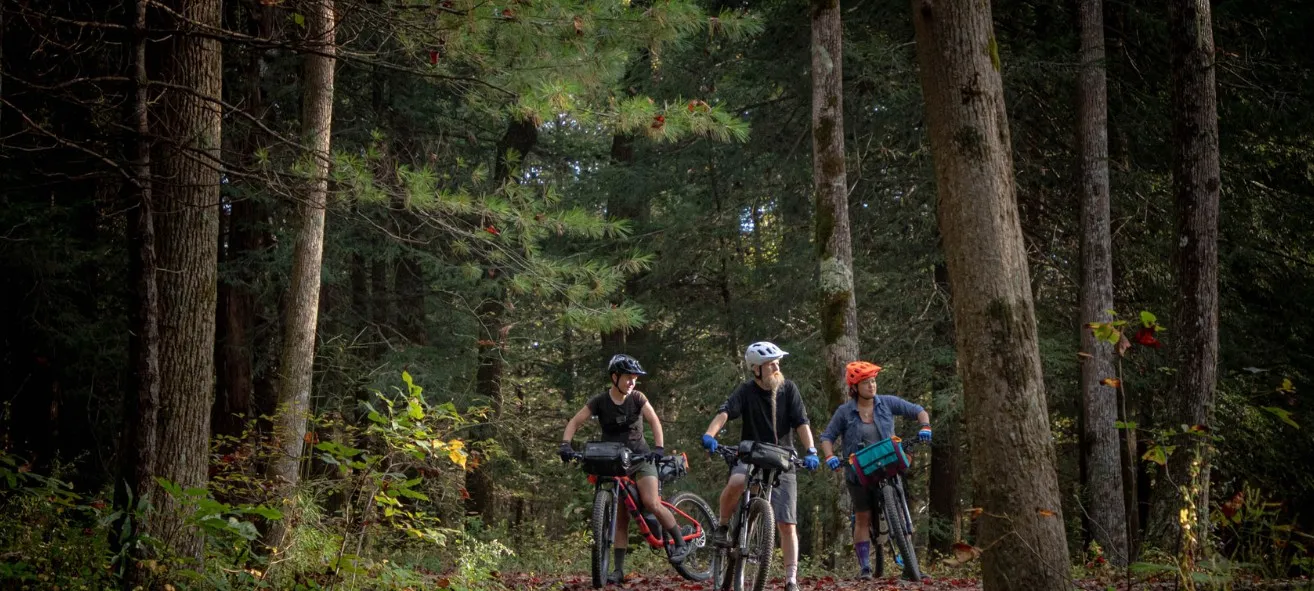
Outside Ellijay, the pavement eventually gives way to gravel, and the gravel gives way to some of the finest mountain biking in Georgia. The Pinhoti winds through hardwood forests and rhododendron thickets, over roots and rocks, and across ridges that seem determined to make you earn every mile.
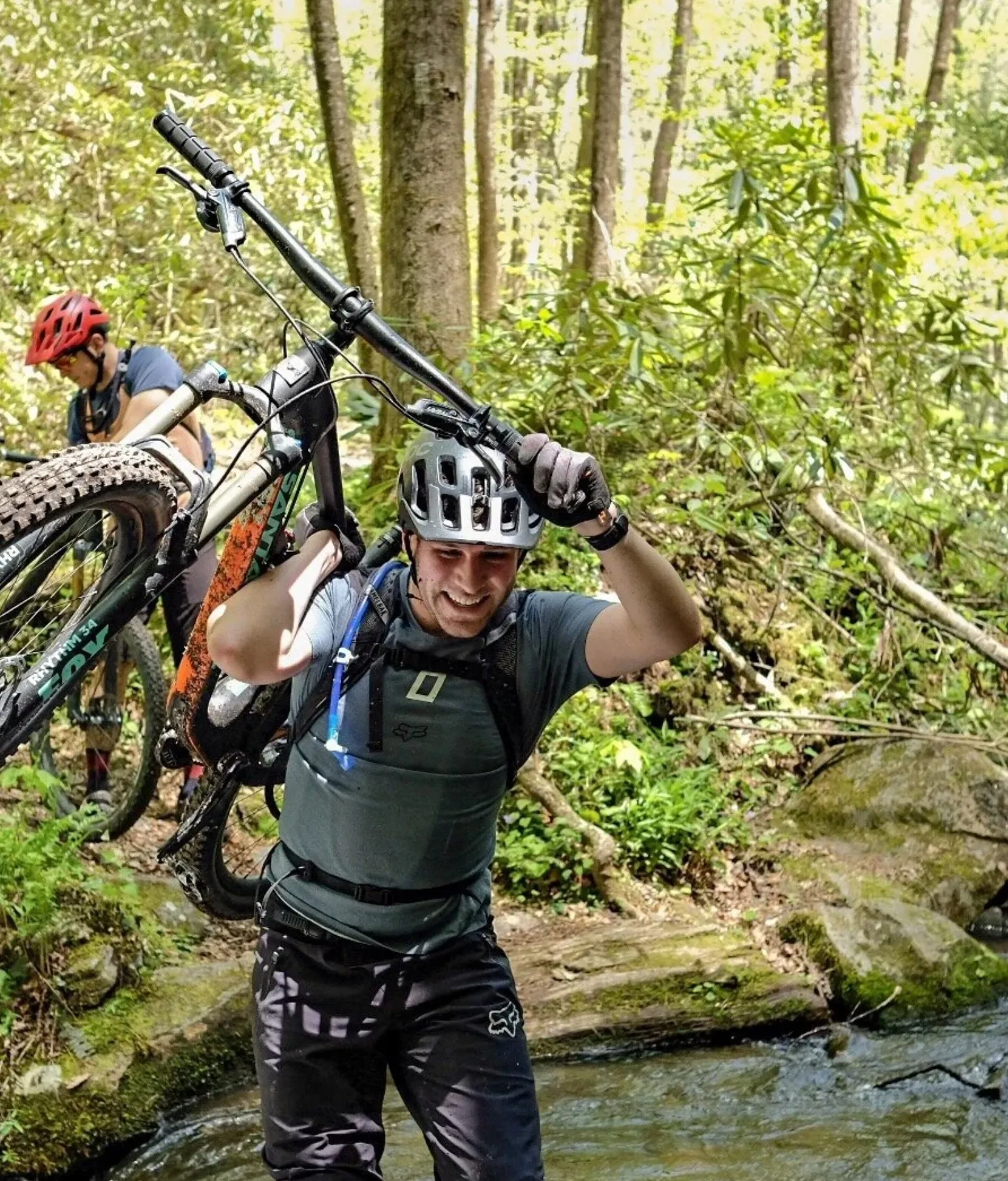
The first climb has a way of settling things. Conversation gets shorter. Legs start complaining. Somewhere below, a creek runs cold through the forest, completely indifferent to how expensive your bicycle is. Then the trail turns downhill, and suddenly all that suffering begins to make sense.
Mulberry Gap sits in the middle of this country, a mountain biking basecamp built around a pretty good idea: spend the day getting dirty, come back hungry, and tell somebody about it. There are cabins, campsites, hot showers, and home-cooked meals. The surrounding trails have become something of a pilgrimage for Southern riders, particularly those who prefer their adventures with a little less pavement.
Mulberry Gap / The Cohutta Mountains
The Long Way Back
A hard climb, a fast descent, and a little mountain basecamp outside Ellijay where the best stories usually start after the bikes are put away.


Concept rendering. Cover, contents, and format may change.
What it is
Doghobble Magazine is the print publication at the center of Doghobble: big pages, independent, print only. There is no digital edition. Its pages carry landscape photography, original reporting and essays, historical and new illustration, and stories that need more room than a phone gives them.
The territory is the one the atlas covers, from the Cumberland Plateau across the Great Valley into the Blue Ridge. The website stays free and keeps growing as a public atlas and field guide. The magazine is where the work that needs paper goes.
Where things stand
- Format
- Large-format print only. No digital edition.
- Frequency
- Two issues a year, planned. Dates and specifications are set once production planning is done.
- Funding
- Reader-funded.
- Advertising
- Nobody appears in the editorial pages because they paid. Any advertising sits in the back of the book.
- Status
- First issue in development. No publication date set.
- Ordering
- Not yet open. The waitlist will hear first.
Stay until it clears.
Get on the waitlist.
It's free and it isn't a subscription. When the first issue can be ordered, the waitlist hears first.
Questions? Write to hello@doghobblemag.com. Writers and photographers, see how to contribute.